Healthcare organizations operate in one of the most heavily regulated industries in the world. Hospitals, healthcare networks, insurance providers, and digital health platforms must regularly submit reports to regulatory agencies to demonstrate compliance, monitor healthcare quality, and support public health initiatives.
These reporting requirements span multiple regulatory bodies, including government agencies, insurance programs, and healthcare oversight organizations.
Behind the scenes, healthcare technology platforms play a critical role in collecting, processing, and submitting the data required for regulatory reporting.
Modern healthcare platforms must manage large volumes of clinical, operational, and financial data while ensuring that reports meet strict formatting, accuracy, and compliance requirements.
Why Regulatory Reporting Matters in Healthcare
Regulatory reporting serves several important purposes within the healthcare system.
Regulators rely on healthcare data to:
- monitor quality of care and patient outcomes
- track healthcare utilization and cost patterns
- ensure compliance with healthcare regulations
- detect fraud or billing irregularities
- monitor public health trends
Healthcare organizations that fail to meet reporting requirements can face penalties, reimbursement delays, or compliance investigations.
As a result, healthcare IT systems must be designed with reporting capabilities built directly into their architecture.
Types of Regulatory Reporting in Healthcare
Healthcare platforms generate several categories of regulatory reports depending on the type of organization and regulatory framework involved.
1. Clinical Quality Reporting
Healthcare providers must often report clinical quality measures that assess the effectiveness of patient care.
Examples include:
- treatment outcomes for chronic conditions
- readmission rates
- infection control metrics
- preventive care measures
These reports help regulators evaluate healthcare quality and identify areas where care delivery can be improved.
2. Financial and Claims Reporting
Healthcare organizations must also submit financial data to insurance providers and government programs.
Examples include:
- claims submissions for reimbursement
- billing compliance reports
- cost and utilization data
Programs such as Medicare and Medicaid rely heavily on claims data to determine reimbursement and monitor healthcare spending.
3. Public Health Reporting
Healthcare providers contribute critical data for public health monitoring.
Examples include:
- reporting infectious diseases
- vaccination records
- epidemiological data for disease tracking
Public health reporting allows authorities to monitor outbreaks, track disease trends, and coordinate response strategies.
4. Privacy and Security Reporting
Healthcare organizations must also maintain reporting mechanisms for security and privacy compliance.
Examples include:
- breach notification reporting under HIPAA
- system audit logs
- access control monitoring
These reports help ensure that patient data is protected and that healthcare systems maintain strong security practices.
Role of EMR Systems in Regulatory Reporting
Electronic Medical Record (EMR) systems serve as the primary source of clinical data used for regulatory reporting.
EMR platforms collect information related to:
- patient demographics
- diagnoses and treatment plans
- clinical procedures
- medication records
- laboratory results
- physician documentation
This data forms the foundation for many regulatory reports.
Most EMR systems include reporting modules capable of extracting relevant data and generating standardized reports required by regulatory agencies.
Because EMR systems capture clinical workflows directly, they provide the most comprehensive view of patient care activities.
Healthcare Data Pipelines for Regulatory Reporting
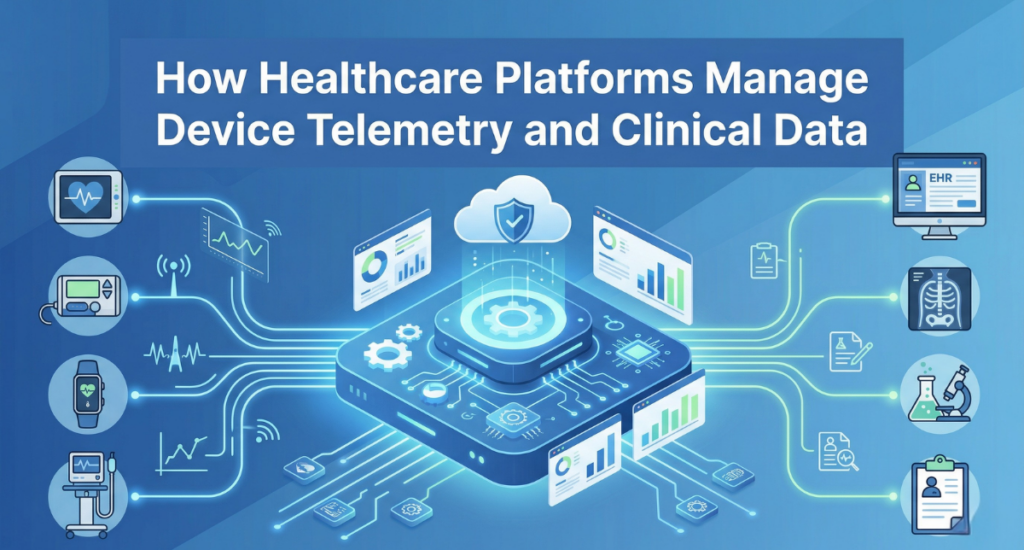
Behind every regulatory report is a complex data pipeline that moves information from operational healthcare systems into reporting environments.
A typical regulatory reporting architecture includes several stages.
1. Clinical Data Sources
Healthcare data originates from multiple operational systems, including:
- EMR systems
- laboratory information systems
- imaging platforms
- billing systems
- patient monitoring systems
These systems generate structured data during routine clinical and administrative workflows.
2. Integration and Data Aggregation
Integration platforms collect data from various healthcare systems and consolidate it into centralized repositories.
Healthcare integration engines often use messaging standards such as HL7 or API-based frameworks like FHIR to exchange data across systems.
This integration layer ensures that data from different platforms can be combined into unified datasets.
3. Data Warehousing and Analytics Platforms
Once data is aggregated, healthcare organizations store it within data warehouses or analytics platforms.
These systems perform functions such as:
- data validation and cleansing
- normalization of clinical terminology
- aggregation of patient records across systems
Data warehouses provide the structured datasets needed for large-scale reporting and analytics.
4. Reporting and Submission Systems
The final stage of the reporting pipeline involves generating reports and submitting them to regulatory agencies.
Reporting platforms format data according to regulatory specifications and validate the completeness of the information.
Some healthcare systems automate report submission through electronic data exchange interfaces with regulatory agencies.
5. Importance of Data Standardization
Regulatory reporting relies heavily on standardized healthcare data formats.
Healthcare platforms must structure clinical information using standardized coding systems such as:
- ICD codes for diagnoses
- CPT codes for procedures
- standardized laboratory terminology
- HL7 or FHIR messaging frameworks
These standards ensure that regulators can interpret healthcare data consistently across different healthcare organizations.
Without standardized data models, regulatory reporting would be extremely difficult to automate.
6. Automation of Compliance Reporting
Historically, regulatory reporting involved significant manual effort from healthcare administrators.
Modern healthcare platforms increasingly automate these reporting processes.
Automation capabilities may include:
- automated report generation based on predefined schedules
- validation rules that detect missing or inconsistent data
- automated submission workflows to regulatory agencies
- alert systems that notify compliance teams of reporting issues
Automated reporting reduces administrative workload while improving reporting accuracy and timeliness.
Challenges in Healthcare Regulatory Reporting
Despite advances in healthcare technology, regulatory reporting remains a complex task for many organizations.
Several challenges commonly arise.
- Fragmented Data Systems: Healthcare data often resides in multiple systems that were not originally designed to work together. Combining this data into consistent regulatory reports requires sophisticated integration architectures.
- Changing Regulatory Requirements: Healthcare regulations frequently evolve as policies change and new reporting requirements are introduced. Healthcare platforms must adapt quickly to support new reporting formats and regulatory guidelines.
- Data Quality and Accuracy: Regulatory reports depend on accurate clinical and administrative data. Incomplete or inconsistent records can create reporting errors that affect compliance and reimbursement.
- Integration Complexity: Healthcare systems rely on dozens of interconnected applications. Maintaining reliable data flows across these systems is essential for accurate reporting. Integration failures can disrupt reporting pipelines and create compliance risks.
Role of Analytics and Data Platforms
To address these challenges, healthcare organizations increasingly rely on advanced analytics and data management platforms.
Modern healthcare data platforms support:
- centralized healthcare data lakes
- advanced reporting engines
- automated data quality monitoring
- population health analytics
These systems enable healthcare organizations to analyze large datasets while supporting regulatory reporting requirements.
Analytics platforms also help organizations identify operational insights that improve care delivery and financial performance.
Qatalys Perspective: Engineering Data Platforms for Healthcare Reporting
Healthcare regulatory reporting relies heavily on robust data architecture and integration capabilities.
At Qatalys, healthcare platform engineering has included designing systems that support complex data flows across clinical and operational environments.
Across multiple healthcare engagements, Qatalys engineers have delivered over 3500 custom interfaces connecting EMR systems with laboratory platforms, imaging systems, pharmacy networks, and medical devices.
For example, Qatalys contributed to the development of the Aprima EMR and Practice Management platform, which integrates clinical workflows, diagnostics, and financial systems within a unified healthcare platform.
These integration architectures help healthcare organizations aggregate clinical and operational data into reporting systems that support compliance, analytics, and regulatory reporting requirements.
The Future of Healthcare Regulatory Reporting
Healthcare regulatory reporting is evolving as digital health technologies and data platforms become more sophisticated.
Several trends are shaping the future of compliance reporting.
- Automated reporting systems: Healthcare platforms increasingly automate report generation and submission processes.
- Real-time compliance monitoring: Advanced analytics systems allow organizations to detect compliance issues in real time rather than relying solely on periodic reports.
- AI-assisted reporting: Artificial intelligence can help identify anomalies, validate data accuracy, and improve reporting efficiency.
- API-based regulatory submissions: Some regulatory agencies are beginning to accept data submissions through API-driven systems that allow automated reporting workflows.
These developments will further reduce administrative burden while improving reporting accuracy.
Conclusion
Regulatory reporting is a fundamental requirement for healthcare organizations operating within highly regulated environments.
Modern healthcare technology platforms play a critical role in managing this process by collecting clinical data, integrating information across systems, and generating structured reports required by regulatory agencies.
By implementing robust data pipelines, standardized data models, and automated reporting systems, healthcare organizations can meet regulatory obligations while maintaining efficient healthcare operations.
As healthcare data ecosystems continue to grow, scalable reporting architectures will remain essential components of modern healthcare platforms.
FAQs
1. What is regulatory reporting in healthcare?
Regulatory reporting involves submitting healthcare data to government agencies, insurance programs, and oversight organizations to demonstrate compliance and monitor healthcare performance.
2. How do EMR systems support regulatory reporting?
EMR systems collect clinical data during patient care workflows and provide reporting modules that extract and format data for regulatory submissions.
3. What types of data are used in healthcare regulatory reporting?
Regulatory reports may include clinical quality metrics, billing and claims data, public health data, and security compliance information.
4. Why is data standardization important in healthcare reporting?
Standardized data formats such as ICD codes and HL7 messaging ensure that regulatory agencies can interpret healthcare data consistently.
5. How can healthcare platforms automate regulatory reporting?
Healthcare platforms automate reporting through data pipelines, analytics platforms, scheduled report generation, and automated submission systems.
Qatalys is a global AI-powered digital transformation company helping businesses drive innovation, scale operations, and achieve sustainable growth. With 30+ years of experience and 1,000+ projects delivered, Qatalys offers services including digital transformation, GCC setup, product engineering, growth services, cybersecurity, and QA. Serving industries like healthcare, BFSI, retail, and more, Qatalys combines global expertise with cost-efficient delivery from India.