Electronic Medical Record (EMR) systems have become the foundation of modern healthcare operations. Hospitals, clinics, and healthcare networks depend on EMR platforms to manage patient records, clinical workflows, diagnostics, and billing processes.
However, many EMR systems currently in use were originally developed more than a decade ago. These platforms were built for healthcare environments that looked very different from today’s digital healthcare ecosystem. Modern healthcare systems now require interoperability, cloud scalability, real-time analytics, telehealth integration, and advanced data security frameworks.
As a result, healthcare organizations increasingly undertake EMR modernization projects to upgrade legacy platforms and support modern care delivery.
Despite the benefits, EMR modernization is one of the most complex technology initiatives healthcare organizations undertake. These projects must address technical, operational, and regulatory challenges while maintaining uninterrupted clinical workflows.
Why EMR Modernization Is Challenging
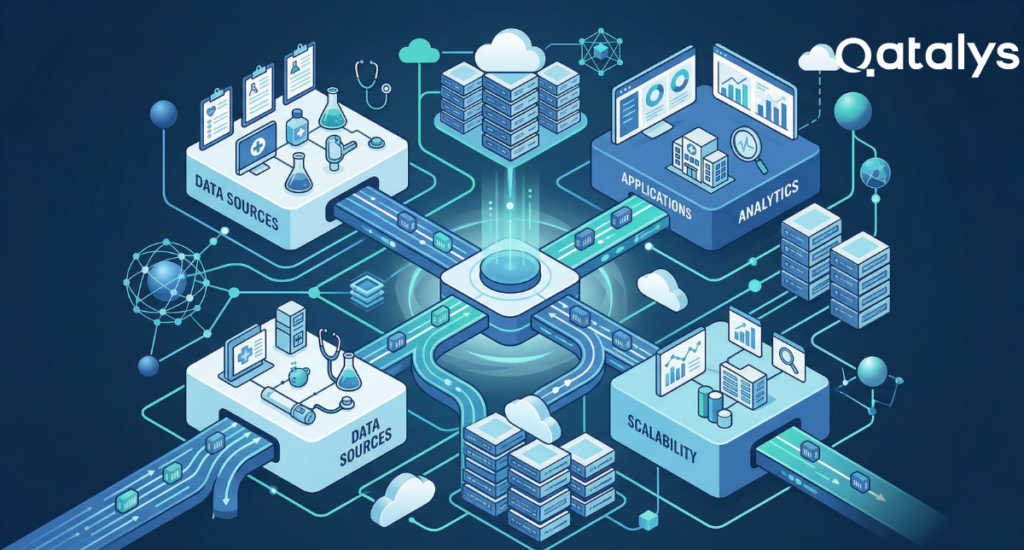
Unlike many enterprise software systems, EMR platforms sit at the center of healthcare operations. Every clinical activity – from patient admissions to laboratory testing and billing – depends on the EMR. Modernizing an EMR therefore impacts nearly every system within the healthcare ecosystem. A typical EMR system integrates with:
- laboratory systems
- radiology platforms
- pharmacy systems
- medical devices
- billing and revenue cycle platforms
- patient engagement tools
Because of these dependencies, changes to the EMR platform must be carefully managed to avoid disrupting clinical workflows or patient care.
Legacy System Complexity
Many EMR systems still operating today were designed using legacy technology frameworks and monolithic architectures. These platforms often include tightly coupled modules for:
- patient registration
- scheduling
- clinical documentation
- billing and revenue management
- reporting and analytics
Over time, healthcare organizations add new capabilities to these systems through patches, custom integrations, and incremental updates. This accumulation of modifications creates technical debt, making the system increasingly difficult to maintain or upgrade.
Modernizing such systems requires careful architectural analysis to determine which components should be refactored, replaced, or integrated with modern services.
Data Migration Challenges
Healthcare organizations maintain extensive patient records accumulated over many years. Migrating this data into modern EMR platforms presents one of the most significant challenges in modernization projects. Healthcare data includes:
- clinical records
- diagnostic reports
- medication histories
- insurance information
- billing records
- device-generated clinical data
Ensuring that this data remains accurate and accessible during migration is critical. Challenges often include:
- inconsistent data formats
- incomplete historical records
- differences in database schemas
- data integrity risks during migration
Even small migration errors can have serious consequences for patient care, making data validation and testing essential during modernization projects.
Integration Dependencies Across Healthcare Systems
EMR platforms rarely operate independently. They integrate with numerous external systems that support clinical and operational workflows. Examples include:
- Laboratory Information Systems (LIS)
- Radiology Information Systems (RIS)
- PACS imaging platforms
- pharmacy management systems
- insurance and billing systems
- health information exchanges
Each of these systems relies on interfaces that allow patient data and clinical information to move between platforms. When an EMR system is modernized, these interfaces must often be redesigned, reconfigured, or rebuilt.
Failure to properly manage integration dependencies can lead to disruptions in diagnostic workflows, billing operations, or clinical documentation.
Interoperability and Messaging Complexity
Healthcare systems rely on interoperability standards to exchange clinical data. The most common standards include:
- HL7 messaging for clinical and administrative data exchange
- FHIR APIs for modern healthcare applications
- DICOM standards for medical imaging systems
During EMR modernization projects, organizations must ensure that these messaging systems continue functioning reliably.
HL7 interfaces often include complex message structures that support workflows such as:
- patient admissions and transfers
- laboratory orders and results
- appointment scheduling
- medication management
Updating these interfaces while maintaining compatibility with existing systems can be technically demanding.
Clinical Workflow Disruption
EMR systems are deeply embedded in clinical workflows. Physicians, nurses, and administrative staff interact with these platforms throughout the patient care process. Modernizing an EMR platform often introduces changes in:
- clinical documentation workflows
- diagnostic ordering processes
- patient record navigation
- reporting systems
Even improvements in system functionality can initially disrupt established workflows. Healthcare organizations must therefore balance modernization goals with the need to maintain efficient clinical operations. User experience design and workflow analysis are critical components of successful EMR modernization initiatives.
Regulatory and Compliance Requirements
Healthcare technology systems must comply with strict regulatory standards designed to protect patient data and ensure reliable healthcare operations. Modernization projects must maintain compliance with frameworks such as:
- HIPAA for patient data privacy and security
- Meaningful Use reporting requirements
- healthcare data exchange standards
Introducing new architectures or cloud environments requires careful evaluation of security controls and compliance frameworks. Security and compliance considerations must therefore be integrated into modernization planning from the beginning.
Change Management and User Adoption
Technology modernization alone does not guarantee successful outcomes. Healthcare professionals who use EMR systems daily must adapt to new interfaces, workflows, and system capabilities. Clinician resistance to new systems is a common challenge during EMR modernization projects. Healthcare organizations must invest in:
- user training programs
- change management strategies
- system usability improvements
Ensuring that new systems support clinical workflows effectively is essential for successful adoption.
Qatalys Perspective: Navigating EMR Modernization
At Qatalys, EMR platform engineering and modernization have been core capabilities for more than two decades. Our teams have worked with healthcare organizations to modernize complex clinical platforms while maintaining integration with existing healthcare ecosystems.
For example, Qatalys played a key role in developing and enhancing the Aprima EMR and Practice Management platform, which supports physician practices with integrated clinical and financial workflows.
In another engagement, Qatalys helped modernize Alteer’s legacy HIS/EMR platform, transforming an older system architecture into a scalable platform capable of supporting modern healthcare integrations.
Across healthcare implementations, Qatalys engineers have delivered over 3500 custom interfaces connecting EMR systems with laboratory platforms, imaging systems, medical devices, and pharmacy networks.
These projects highlight an important lesson: successful EMR modernization requires deep expertise in healthcare integration architecture, clinical workflows, and interoperability standards.
Strategies for Successful EMR Modernization
Healthcare organizations can reduce modernization risks by adopting structured modernization strategies.
- Incremental modernization: Instead of replacing entire systems at once, organizations can modernize individual components such as reporting systems or integration layers.
- API-based integration: Introducing API layers allows modern applications to interact with legacy systems during the transition period.
- Cloud-enabled architectures: Migrating components to cloud infrastructure improves scalability and reliability while supporting modern analytics platforms.
- Strong interoperability frameworks: Maintaining stable messaging systems and integration engines helps preserve system connectivity during modernization.
By adopting these strategies, healthcare organizations can modernize EMR platforms while minimizing operational disruption.
EMR Modernization Challenges
EMR modernization is a critical step for healthcare organizations seeking to support modern digital health capabilities. However, these initiatives involve complex challenges related to legacy architectures, data migration, system integrations, and regulatory compliance.
Successful modernization requires careful planning, scalable integration architecture, and a deep understanding of healthcare workflows. Organizations that navigate these challenges effectively can build modern EMR platforms capable of supporting interoperable, data-driven healthcare systems.
FAQs
1. Why are EMR modernization projects difficult?
EMR systems sit at the center of healthcare operations and integrate with numerous clinical and administrative systems, making upgrades technically complex.
2. What is the biggest challenge in EMR modernization?
Data migration and integration dependencies are among the most significant challenges in EMR modernization projects.
3. How long do EMR modernization projects typically take?
Depending on system complexity, modernization initiatives may take several months to multiple years.
4. How do healthcare organizations maintain interoperability during modernization?
Organizations typically maintain interoperability using integration engines, HL7 messaging systems, and API-based interfaces.
5. What are the benefits of EMR modernization?
Modernized EMR platforms enable better interoperability, improved scalability, stronger security, and support for advanced analytics and digital health services.

Qatalys is a global AI-powered digital transformation company helping businesses drive innovation, scale operations, and achieve sustainable growth. With 30+ years of experience and 1,000+ projects delivered, Qatalys offers services including digital transformation, GCC setup, product engineering, growth services, cybersecurity, and QA. Serving industries like healthcare, BFSI, retail, and more, Qatalys combines global expertise with cost-efficient delivery from India.