Healthcare organizations today are under unprecedented pressure to modernize. Rising patient expectations, increasing regulatory requirements, workforce challenges, and the growing complexity of healthcare data are forcing healthcare leaders to rethink how technology systems support care delivery.
Many healthcare providers and health technology companies still operate in fragmented IT environments built over decades. These environments often include Electronic Medical Records (EMR), Hospital Information Systems (HIS), imaging systems, laboratory systems, pharmacy networks, payer platforms, and connected medical devices that were implemented independently over time.
When these systems operate in silos, the result is duplicated data, manual workflows, limited visibility across care journeys, and inefficiencies that affect both clinicians and patients.
Digital transformation in healthcare is therefore not simply about adopting new technologies. It requires a strategic focus on modernizing core platforms, enabling interoperability, and building scalable digital architectures that allow healthcare organizations to operate efficiently and innovate continuously.
Technology leaders who prioritize these foundations will be better positioned to improve clinical workflows, support emerging technologies, and deliver better patient outcomes.
What Is Digital Transformation in Healthcare?
Digital transformation in healthcare refers to the use of modern digital technologies to redesign healthcare operations, patient engagement, and clinical workflows.
This transformation often includes initiatives such as:
- Modernizing legacy EMR and hospital systems
- Integrating clinical systems across healthcare organizations
- Automating administrative and clinical workflows
- Enabling real-time healthcare data exchange
- Using analytics and AI to support clinical decision-making
However, successful transformation requires more than technology adoption.
According to the World Economic Forum, healthcare transformation increasingly depends on the ability to integrate data and digital systems across the care ecosystem, allowing clinicians and healthcare organizations to operate with greater efficiency and insight.
Organizations that approach transformation as a long-term evolution of their technology architecture, rather than a one-time software upgrade, are far more likely to achieve meaningful results.
Why Healthcare Digital Transformation Is More Complex Than Other Industries
Digital transformation is challenging in any industry, but healthcare environments introduce additional layers of complexity.
Healthcare organizations typically operate across numerous specialized systems, including:
- EMR / EHR platforms
- Practice management systems
- Radiology systems (RIS/PACS)
- Diagnostic laboratory platforms
- Pharmacy systems
- Insurance and billing platforms
- Remote monitoring devices
Each system may rely on different data formats, integration standards, and workflows.
Healthcare interoperability standards such as HL7, CDA/CCD, X12, and NCPDP govern how information is exchanged across systems. Implementing these standards across large healthcare ecosystems can be technically demanding.
At the same time, healthcare organizations must maintain strict compliance with regulations and ensure that clinical systems remain reliable and secure.
Research published in the National Library of Medicine highlights that fragmented health IT systems and limited interoperability remain among the most significant barriers to effective digital transformation in healthcare environments.
This combination of regulatory oversight, operational sensitivity, and technical fragmentation makes healthcare transformation significantly more complex than typical enterprise modernization initiatives.
Why Many Healthcare Digital Transformation Initiatives Fail
Despite significant investment, many healthcare transformation initiatives struggle to deliver meaningful improvements.
A common reason is that organizations focus on deploying new technologies without addressing the underlying architecture of their systems.
Healthcare organizations may implement new tools, cloud platforms, or analytics solutions, yet continue to operate on legacy infrastructures that lack interoperability and scalability.
According to Deloitte, many healthcare digital transformation programs stall because organizations underestimate the complexity of integrating existing systems and redesigning workflows across the enterprise.
Common challenges include:
- New applications layered on top of legacy systems
- Poor integration between clinical platforms
- Fragmented clinical workflows across departments
- Inconsistent patient data across systems
- Limited data governance frameworks
Without strong integration architecture and unified data infrastructure, even advanced technologies cannot deliver meaningful improvements in care delivery.
Successful digital transformation requires healthcare leaders to rethink how systems communicate, exchange data, and support clinical workflows across the organization.
Focus Area #1: Modernizing Core Healthcare Platforms
At the center of most healthcare technology environments are core clinical systems such as EMR platforms and Hospital Information Systems.
Many of these platforms were originally designed as monolithic systems that are difficult to scale or integrate with modern technologies.
As healthcare organizations expand digital capabilities, these legacy platforms can become major constraints.
Modernization initiatives often focus on:
- Re-architecting legacy systems into modular platforms
- Supporting scalable multi-tenant environments
- Improving clinician workflow usability
- Enabling integration-ready system architectures
For example, engineering teams working with Aprima Medical Software supported the development and enhancement of a large-scale EMR and Practice Management platform used by physician practices. The platform included modules covering scheduling, charting, laboratory integration, prescriptions, billing, and reporting.
Projects like these demonstrate how healthcare platform modernization requires deep expertise in both clinical workflows and scalable system architecture.
Focus Area #2: Interoperability and Integration Architecture
Interoperability remains one of the most critical foundations of healthcare transformation.
Healthcare platforms must exchange data across a wide ecosystem that includes:
- Diagnostic laboratories
- Imaging systems
- Pharmacies
- Insurance platforms
- Patient portals
- Connected medical devices
To support this exchange, healthcare organizations rely on interoperability standards such as HL7, CDA/CCD, X12, and NCPDP.
Large healthcare ecosystems may require thousands of integration interfaces connecting clinical systems, diagnostic platforms, and medical devices.
Across multiple healthcare engagements, engineering teams have delivered 3500+ healthcare interfaces connecting EMR systems, labs, imaging platforms, pharmacy networks, and medical devices, enabling automated workflows and reliable data exchange across healthcare ecosystems.
Integration architecture often includes components such as:
- Interface engines
- Service bus architectures
- Workflow orchestration systems
- Transaction monitoring platforms
These integration layers enable healthcare systems to communicate reliably and support complex clinical workflows.
Without strong interoperability frameworks, healthcare organizations struggle to scale digital transformation initiatives.
Focus Area #3: Data Architecture and Workflow Automation
Healthcare systems increasingly rely on real-time data flows to support both clinical decision-making and operational efficiency.
When systems are properly integrated, healthcare organizations can automate many routine processes.
Examples include:
- Automatic ingestion of laboratory results into EMR systems
- Integration of imaging reports into patient records
- Electronic prescription workflows connecting clinicians and pharmacies
- Automated billing and claims processing
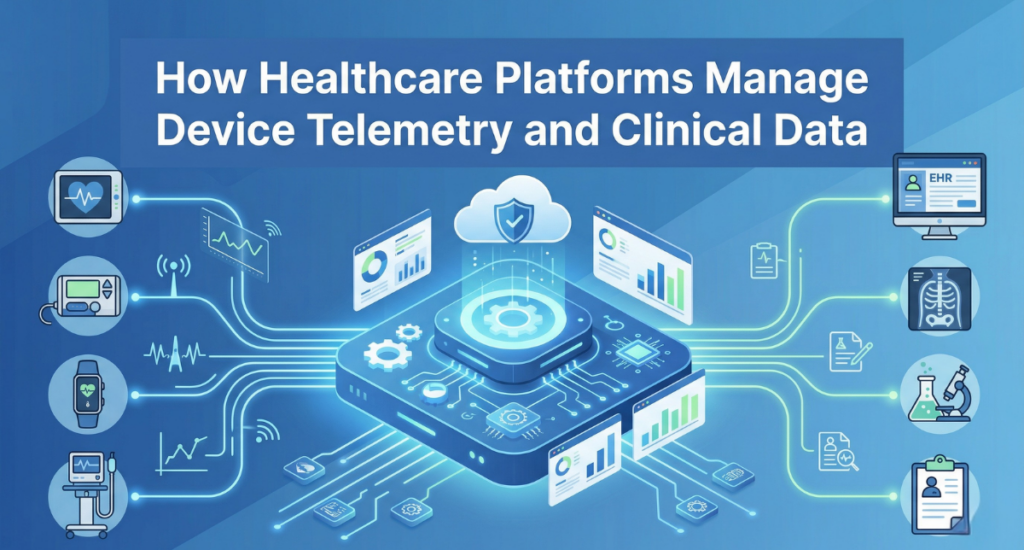
Healthcare platforms may also integrate device telemetry and remote monitoring data directly into EMR systems to support continuous patient monitoring.
These integrations reduce manual data entry, improve clinical visibility, and help clinicians access timely patient information.
A Modern Healthcare Digital Architecture
To support scalable digital transformation, many healthcare organizations adopt layered technology architectures.
A typical healthcare digital platform architecture includes several key layers.
1. Experience Layer
Systems that clinicians and patients interact with directly, including:
- Clinician portals
- Patient portals
- Telehealth platforms
- Mobile health applications
2. Application Layer
Core operational systems such as:
- EMR / EHR platforms
- Practice management systems
- Revenue cycle management systems
- Clinical decision support systems
3. Integration Layer
Infrastructure that connects systems across the healthcare ecosystem:
- Interface engines
- Service bus platforms
- API gateways
- Messaging and workflow orchestration tools
This layer enables communication between systems using standards like HL7 and CDA.
4. Data Layer
Platforms that manage and analyze healthcare data, including:
- Master patient index systems
- Clinical data repositories
- Reporting and analytics platforms
5. Infrastructure Layer
The foundational infrastructure supporting security, scalability, and compliance.
Healthcare integration engines often act as the backbone of this architecture by enabling workflow automation and reliable data exchange across complex healthcare ecosystems.
What Should Healthcare CIOs and CTOs Prioritize?
Healthcare technology leaders planning transformation initiatives should focus on several strategic priorities.
- Modernizing core clinical systems: Legacy EMR and HIS platforms must be updated to support modern healthcare workflows.
- Building strong interoperability infrastructure: Integration frameworks allow clinical systems to exchange data reliably.
- Developing unified healthcare data architectures: Consistent patient data across systems enables better decision-making and analytics.
- Automating workflows: Automation reduces manual administrative tasks and improves clinical efficiency.
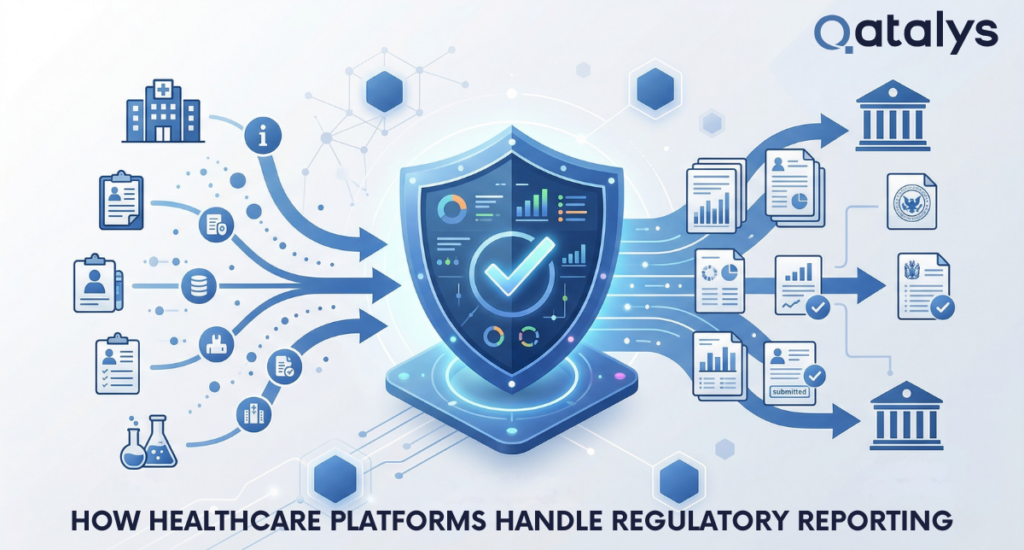
- Embedding regulatory compliance: Healthcare systems must support regulatory frameworks such as HIPAA and healthcare reporting requirements.
Organizations that align these priorities can build technology environments capable of supporting long-term healthcare innovation.
Healthcare Digital Transformation Checklist for Technology Leaders
Healthcare technology leaders evaluating transformation initiatives should consider the following checklist:
- Platform modernization: Are legacy EMR or HIS platforms limiting scalability or integration?
- Interoperability: Can clinical systems exchange healthcare data in real time?
- Integration architecture: Does the organization have a scalable interface engine or integration platform?
- Data governance: Is patient data consistent and reliable across systems?
- Workflow automation: Can key clinical and administrative workflows be automated?
- Regulatory compliance: Are compliance frameworks embedded within system architecture?
Addressing these areas early can significantly improve the success of digital transformation initiatives.
Preparing Healthcare Platforms for the Next Phase of Innovation
Healthcare innovation continues to accelerate.
Technologies such as:
- AI-assisted diagnostics
- Predictive analytics
- Remote patient monitoring
- Connected medical devices
- Population health management
are transforming how healthcare services are delivered.
However, these innovations require strong digital foundations.
Healthcare organizations that invest today in scalable system architecture, interoperability frameworks, and robust data infrastructure will be better positioned to adopt these technologies in the future.
The Qatalys Perspective
Healthcare transformation requires deep expertise in system architecture, interoperability, and healthcare platform engineering.
Over the years, Qatalys has worked across multiple healthcare ecosystems, including EMR platforms, diagnostic systems, radiology platforms, and pharmacy integrations.
These engagements have included collaborations with organizations such as Aprima Medical Software, Abbott Diagnostics, RamSoft, CVS Caremark, and other healthcare technology providers, where teams supported initiatives ranging from EMR development and platform modernization to large-scale healthcare integrations.
Across these healthcare engagements, Qatalys teams have delivered 3500+ healthcare interfaces connecting EMR systems, diagnostic labs, imaging platforms, pharmacy networks, and medical devices, enabling reliable data exchange and automated workflows across complex healthcare environments.
This experience spans:
- EMR and HIS platform modernization
- Clinical workflow integration
- Radiology and diagnostic system integrations
- Healthcare device and remote monitoring integrations
- Interoperability frameworks across healthcare ecosystems
Digital transformation in healthcare requires more than new tools. It requires a deep understanding of how healthcare platforms operate, integrate, and evolve.
Organizations exploring healthcare platform modernization or interoperability initiatives can benefit from working with teams that understand the complexities of healthcare technology environments.
FAQs
1. What is digital transformation in healthcare?
Digital transformation in healthcare involves modernizing healthcare systems and processes using digital technologies such as integrated EMR platforms, data analytics, automation, and interoperable healthcare systems.
2. Why is interoperability important in healthcare IT?
Interoperability enables different healthcare systems – such as EMRs, labs, and pharmacy systems – to exchange data efficiently, improving clinical workflows and ensuring clinicians have access to complete patient information.
3. What are the biggest challenges in healthcare digital transformation?
Major challenges include legacy systems, fragmented IT environments, limited interoperability, regulatory complexity, and the need for strong data governance.
4. How can healthcare organizations begin digital transformation?
Most organizations start by modernizing core systems, building integration architecture, improving data infrastructure, and automating key workflows.
5. What technologies are shaping the future of healthcare transformation?
Key technologies include artificial intelligence, predictive analytics, remote patient monitoring, telehealth platforms, and advanced healthcare data systems.

Qatalys is a global AI-powered digital transformation company helping businesses drive innovation, scale operations, and achieve sustainable growth. With 30+ years of experience and 1,000+ projects delivered, Qatalys offers services including digital transformation, GCC setup, product engineering, growth services, cybersecurity, and QA. Serving industries like healthcare, BFSI, retail, and more, Qatalys combines global expertise with cost-efficient delivery from India.