Healthcare organizations increasingly rely on digital platforms to manage patient data, clinical workflows, and operational processes. Electronic Medical Records (EMR), telehealth platforms, patient portals, diagnostic systems, and healthcare SaaS applications all process large volumes of sensitive patient information.
Protecting this data is a fundamental requirement of modern healthcare IT systems. In the United States, the Health Insurance Portability and Accountability Act (HIPAA) establishes the regulatory framework that governs how healthcare data must be stored, transmitted, and protected.
For healthcare software platforms, HIPAA compliance is not simply a legal checkbox. It is a critical architectural requirement that shapes how healthcare applications are designed, deployed, and maintained.
Organizations building healthcare platforms must ensure that security, access control, and data protection mechanisms are embedded directly into their system architecture.
What HIPAA Compliance Means for Healthcare Software
HIPAA establishes national standards for protecting sensitive patient health information.
The regulation applies to organizations that create, process, or store Protected Health Information (PHI). This includes hospitals, healthcare providers, insurance companies, and technology companies that build healthcare software platforms.
HIPAA compliance is primarily defined through three major rules:
1. Privacy Rule
The HIPAA Privacy Rule defines how patient health information can be collected, used, and disclosed. It establishes guidelines for how healthcare organizations must protect patient privacy.
2. Security Rule
The Security Rule focuses specifically on electronic Protected Health Information (ePHI). It outlines the administrative, technical, and physical safeguards that organizations must implement to protect healthcare data.
3. Breach Notification Rule
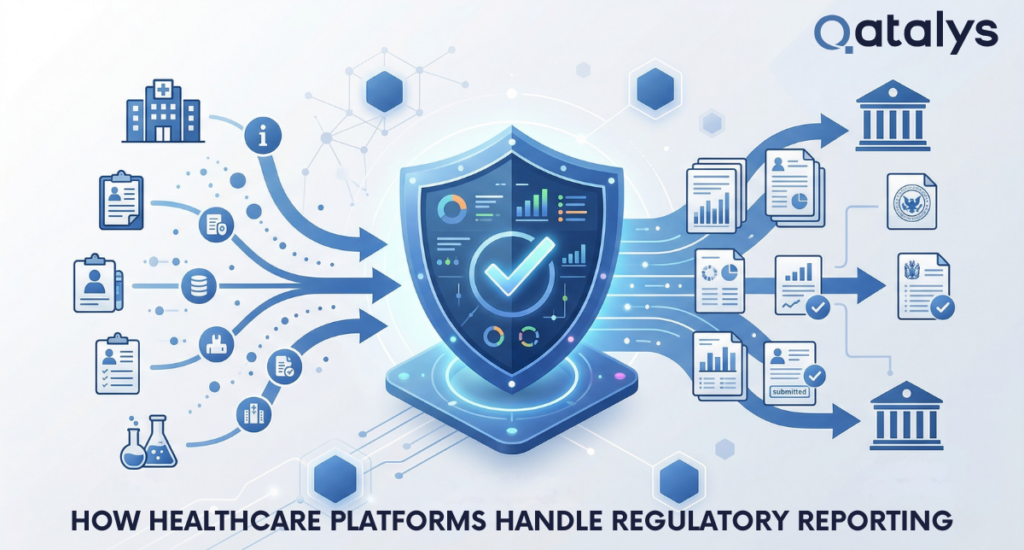
The Breach Notification Rule requires organizations to notify patients and regulators when unauthorized access or disclosure of PHI occurs.
For healthcare software platforms, the Security Rule is the most relevant, as it defines the technical safeguards required for protecting digital health data.
What Qualifies as Protected Health Information (PHI)
Protected Health Information refers to any information that can identify a patient and is associated with their medical history, treatment, or healthcare services.
Examples of PHI include:
- patient names and identifiers
- medical records and diagnoses
- laboratory results and imaging reports
- insurance and billing information
- prescription records
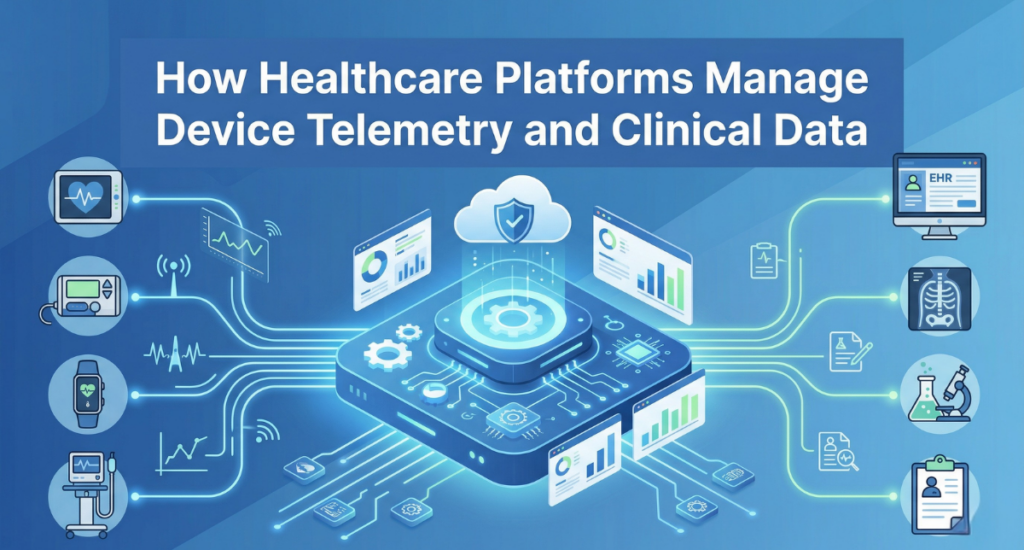
- device-generated clinical data
Any healthcare software platform that stores, processes, or transmits PHI must implement security controls that comply with HIPAA requirements.
This applies not only to hospital systems but also to telehealth platforms, healthcare SaaS applications, remote monitoring platforms, and healthcare analytics systems.
Core Technical Requirements for HIPAA-Compliant Platforms
HIPAA does not prescribe specific technologies. Instead, it defines security principles that healthcare software platforms must implement.
Several core technical safeguards are required.
1. Access Control
Healthcare systems must ensure that only authorized users can access patient data.
Most healthcare platforms implement role-based access control (RBAC) to restrict access based on user roles.
Examples include:
- physicians accessing patient records
- administrative staff accessing scheduling systems
- billing teams accessing financial information
Multi-factor authentication is also commonly used to strengthen access security.
2. Encryption
Encryption protects patient data from unauthorized access during storage and transmission.
Healthcare platforms must implement:
- encryption for data at rest in databases and storage systems
- encryption for data in transit across networks
- secure key management practices
Encryption ensures that even if data is intercepted, it cannot be accessed without proper authorization.
3. Audit Logging
HIPAA requires healthcare platforms to maintain detailed logs of system activity.
Audit logs typically record:
- user logins and authentication attempts
- access to patient records
- data modifications
- administrative actions
These logs help organizations detect security incidents and investigate potential breaches.
4. Data Integrity
Healthcare platforms must ensure that patient data cannot be altered improperly.
Data integrity safeguards may include:
- version control mechanisms for medical records
- digital signatures for clinical documents
- system-level controls preventing unauthorized data changes
Maintaining accurate medical records is critical for patient safety and regulatory compliance.
5. Backup and Disaster Recovery
Healthcare platforms must ensure that patient data remains available even during system failures or cyber incidents.
Organizations typically implement:
- automated data backups
- redundant storage systems
- disaster recovery plans
- failover infrastructure
These measures ensure continuity of care even during technical disruptions.
Architecture Patterns for HIPAA-Compliant Healthcare Platforms
HIPAA compliance affects the overall architecture of healthcare software systems. Modern healthcare platforms often incorporate several architectural patterns designed to protect sensitive data.
1. Secure Infrastructure
Healthcare platforms typically deploy infrastructure environments designed with security as a primary consideration.
These environments include:
- hardened operating systems
- network segmentation
- firewall protections
- intrusion detection systems
Cloud infrastructure providers also offer HIPAA-compliant environments designed specifically for healthcare workloads.
2. PHI Data Segregation
Many healthcare platforms separate PHI data from other application data.This approach reduces the exposure of sensitive information and allows security controls to be applied more precisely. Sensitive healthcare data may be stored within secure data services that enforce encryption and strict access policies.
3. Secure Integration Layer
Healthcare systems rarely operate in isolation. They must integrate with external platforms such as laboratory systems, imaging systems, pharmacy networks, and insurance providers.
These integrations typically occur through interoperability frameworks such as:
- HL7 messaging
- FHIR APIs
- secure integration engines
The integration layer must enforce authentication, encryption, and data validation to ensure that PHI is protected during data exchange.
4. Monitoring and Security Operations
Modern healthcare platforms implement continuous monitoring systems that track security events and system activity. These systems help detect suspicious activity such as unauthorized access attempts or unusual data transfers. Security teams use these monitoring tools to respond quickly to potential threats and maintain compliance.
HIPAA Compliance in Cloud Healthcare Platforms
Many healthcare organizations are migrating their software platforms to cloud environments. Cloud providers such as AWS, Microsoft Azure, and Google Cloud offer infrastructure environments that support HIPAA compliance.
However, compliance remains a shared responsibility.
Cloud providers secure the underlying infrastructure, while healthcare software vendors remain responsible for securing their applications, managing access controls, and protecting patient data.
This shared responsibility model makes security architecture even more important.
Common HIPAA Compliance Challenges
Healthcare organizations face several challenges when building compliant software platforms.
1. Legacy systems
Many healthcare environments still rely on legacy software platforms that were not designed with modern security frameworks.
Integrating these systems into secure architectures can be difficult.
2. Third-party integrations
Healthcare platforms often integrate with multiple external vendors, including labs, pharmacies, and device manufacturers.
Each integration introduces additional security considerations.
3. Rapid product development
Healthcare startups frequently move quickly to build new digital products, which can create security gaps if compliance requirements are not addressed early in development.
Embedding security practices into the development lifecycle helps prevent these issues.
Qatalys Perspective: Engineering Secure Healthcare Platforms
At Qatalys, healthcare platform engineering has been a core capability for more than two decades.
Our teams have built and modernized healthcare platforms that manage sensitive clinical and operational data across complex healthcare ecosystems.
Across multiple healthcare engagements, Qatalys engineers have delivered over 3500 custom interfaces connecting EMR systems with laboratory systems, imaging platforms, medical devices, and pharmacy networks.
For example, Qatalys contributed to the development of the Aprima EMR and Practice Management platform, supporting physician practices with clinical documentation, billing workflows, and integration with external healthcare systems.
In addition to EMR development, Qatalys has designed integration architectures that enable secure healthcare data exchange while maintaining compliance with regulatory standards.
These experiences reinforce a key principle of healthcare software development: security and compliance must be embedded into the platform architecture from the beginning.
Best Practices for Building HIPAA-Compliant Healthcare Platforms
Healthcare organizations building modern digital platforms should consider several best practices.
- Security-first architecture: Security controls should be integrated into platform design rather than added later.
- Zero-trust access models: Systems should assume that no user or service is automatically trusted and must continuously verify access permissions.
- Secure development lifecycle: Development teams should incorporate security testing, vulnerability scanning, and code reviews into the software development process.
- Continuous monitoring: Real-time monitoring systems help detect suspicious behavior and respond quickly to security threats.
By embedding these practices into platform development, organizations can reduce security risks while maintaining compliance.
HIPAA Compliance for Healthcare Software Platforms: Conclusion
HIPAA compliance is a foundational requirement for healthcare software platforms that manage patient data.
As healthcare organizations continue adopting digital technologies, protecting patient information becomes increasingly important.
Building HIPAA-compliant platforms requires more than simply meeting regulatory requirements. It requires a comprehensive approach that integrates security controls, access management, encryption, and monitoring into the architecture of healthcare systems.
Organizations that design platforms with compliance and security at their core can build trustworthy healthcare technologies that support both innovation and patient privacy.
FAQs
1. What makes healthcare software HIPAA compliant?
Healthcare software becomes HIPAA compliant when it implements administrative, technical, and physical safeguards that protect Protected Health Information (PHI).
2. Does HIPAA apply to cloud healthcare platforms?
Yes. Cloud platforms used to store or process PHI must follow HIPAA security requirements and typically require Business Associate Agreements (BAAs).
3. What are HIPAA technical safeguards?
Technical safeguards include access control, encryption, audit logging, and mechanisms that ensure the integrity of healthcare data.
4. Do healthcare APIs need to be HIPAA compliant?
Yes. APIs that exchange patient data must enforce authentication, encryption, and logging to ensure secure data transmission.
5. Who is responsible for HIPAA compliance in healthcare software?
Both healthcare providers and technology vendors share responsibility for ensuring that systems handling PHI meet HIPAA compliance standards.

Qatalys is a global AI-powered digital transformation company helping businesses drive innovation, scale operations, and achieve sustainable growth. With 30+ years of experience and 1,000+ projects delivered, Qatalys offers services including digital transformation, GCC setup, product engineering, growth services, cybersecurity, and QA. Serving industries like healthcare, BFSI, retail, and more, Qatalys combines global expertise with cost-efficient delivery from India.