Healthcare organizations today operate within highly complex digital ecosystems. A typical hospital or healthcare provider network relies on dozens of interconnected systems – Electronic Medical Records (EMR), lab systems, radiology platforms, pharmacy networks, billing systems, insurance platforms, and patient portals.
Each of these systems generates critical clinical and operational data. But when these platforms cannot communicate effectively, the result is fragmented workflows, duplicate data entry, delayed clinical decisions, and operational inefficiencies.
Healthcare interoperability is the discipline that solves this problem.
In modern healthcare IT environments, interoperability enables systems to exchange clinical data reliably, securely, and in a format that other systems can understand and use. It is the foundation that allows care providers, labs, pharmacies, and insurers to operate as part of a connected healthcare ecosystem rather than isolated digital silos.
What Healthcare Interoperability Actually Means
Healthcare interoperability refers to the ability of healthcare systems, applications, and devices to exchange patient and operational data across platforms while preserving the meaning and usability of that data.
True interoperability is not simply about sending data from one system to another.
For clinical workflows to function properly, systems must be able to:
- transmit clinical data reliably
- interpret that data consistently
- integrate it into existing workflows
- make it available to clinicians at the right moment
For example, when a lab sends results to an EMR system, interoperability ensures that the results are not only delivered but correctly mapped to the patient’s record, displayed within the physician’s workflow, and available for downstream reporting or clinical decision support.
Without this level of integration, data exchange becomes fragmented and unreliable.
Why Interoperability Matters for Healthcare Organizations
Healthcare systems depend on interoperability to deliver coordinated care, maintain regulatory compliance, and operate efficiently.
- Clinical coordination: Providers increasingly operate across distributed care environments that include hospitals, outpatient clinics, diagnostic centers, and remote monitoring platforms. Interoperability allows clinicians to access complete patient histories across these environments, enabling faster and more informed decision-making.
- Operational efficiency: Disconnected systems force administrative staff to manually transfer information between platforms. This increases operational overhead and introduces the risk of data errors. Interoperability automates these workflows by synchronizing clinical and administrative systems.
- Patient experience: Patients expect healthcare providers to have a complete understanding of their medical history. When systems are interoperable, patient records move seamlessly across providers, improving care continuity.
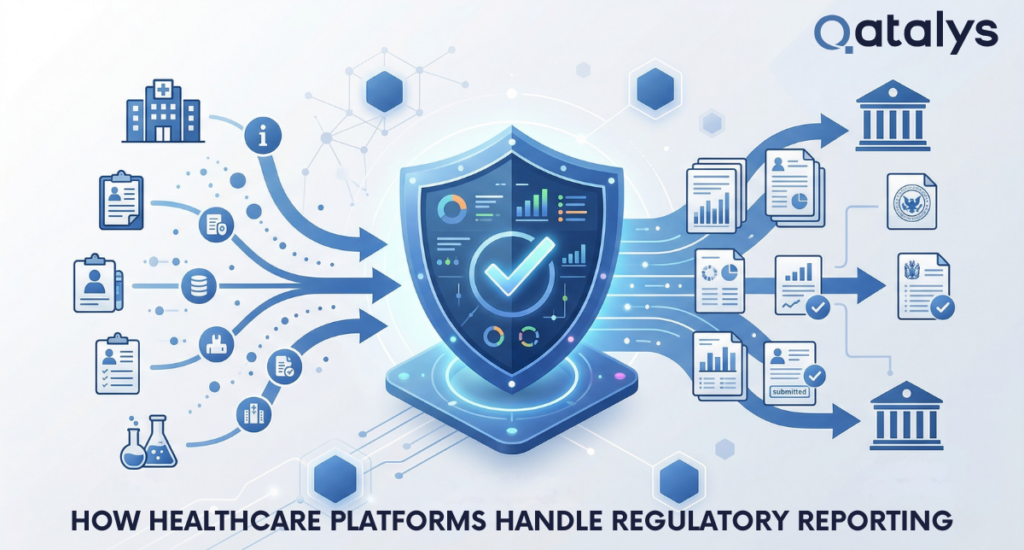
- Regulatory and reporting requirements: Healthcare organizations must comply with reporting standards, claims processing workflows, and regulatory frameworks such as HIPAA. Interoperable systems enable reliable data exchange between providers, payers, and regulatory systems.
The Different Levels of Healthcare Interoperability
Healthcare interoperability is typically described across four levels, each representing increasing sophistication in how data is exchanged and interpreted.
- Foundational interoperability: This is the most basic level, where systems can transmit data from one platform to another. However, the receiving system may not fully interpret the data.
- Structural interoperability: Structural interoperability ensures that exchanged data follows standardized formats and structures, enabling receiving systems to process and display information consistently.
- Semantic interoperability: Semantic interoperability enables systems to interpret clinical meaning correctly. For example, diagnostic codes, lab results, and clinical notes are mapped in ways that preserve their meaning across systems.
- Organizational interoperability: At the highest level, healthcare organizations align workflows, governance models, and policies to enable seamless collaboration across institutions.
Most healthcare organizations operate somewhere between structural and semantic interoperability, with ongoing efforts to achieve more integrated environments.
Key Systems That Must Interoperate in Healthcare Environments
Modern healthcare environments require integration across a wide range of systems.
These include:
- Electronic Health Records (EHR/EMR)
- Practice Management systems
- Laboratory Information Systems (LIS)
- Radiology Information Systems (RIS)
- Pharmacy networks and prescription systems
- Claims and billing platforms
- Patient portals and mobile applications
- Medical devices and remote monitoring systems
Each system often originates from a different vendor and uses different data formats, making integration technically complex.
Also Read: Digital Transformation in Healthcare: Where Technology Leaders Should Focus
Standards That Enable Healthcare Data Exchange
To enable interoperability across these diverse systems, healthcare organizations rely on standardized messaging frameworks.
The most widely used standards include:
- HL7: Health Level Seven (HL7) is one of the most widely adopted standards for exchanging clinical and administrative healthcare data. HL7 messages are used extensively for workflows such as patient admission, discharge, transfer events, lab results, and scheduling.
- Fast Healthcare Interoperability Resources(FHIR): FHIR is a modern interoperability standard that uses RESTful APIs and structured data formats such as JSON and XML. It allows healthcare applications to exchange data through API-driven architectures. FHIR is increasingly used in cloud-based healthcare platforms and patient-facing applications.
- DICOM: DICOM enables interoperability for medical imaging systems such as radiology platforms, PACS systems, and diagnostic imaging equipment.
- X12: X12 standards support healthcare financial transactions such as claims submissions and payment processing.
Together, these standards form the technical foundation for healthcare data exchange across providers, payers, and diagnostic systems.
How Healthcare Interoperability Architecture Works
Behind every interoperable healthcare environment is a sophisticated integration architecture.
Most healthcare systems rely on an interoperability layer that connects clinical and administrative systems through integration engines or middleware platforms.
A typical architecture includes:
- Source systems such as EMR platforms, lab systems, or devices
- Interface engines that receive messages from source systems
- Transformation layers that map data formats and fields
- Workflow orchestration components that route data to appropriate systems
- Destination systems such as EHRs, billing systems, or analytics platforms
These integration engines also provide monitoring capabilities, error handling, and transaction tracking to ensure reliable data exchange.
Real-World Healthcare Interoperability Scenarios
Healthcare interoperability supports a wide range of operational workflows. Common scenarios include:
- Laboratory integrations: Diagnostic laboratories transmit test results directly to EMR systems, ensuring physicians receive results within clinical workflows.
- Imaging workflows: Radiology platforms share diagnostic imaging results and reports with EHR systems, enabling physicians to access imaging data alongside clinical records.
- Pharmacy integrations: Prescription systems exchange medication data between providers and pharmacy networks.
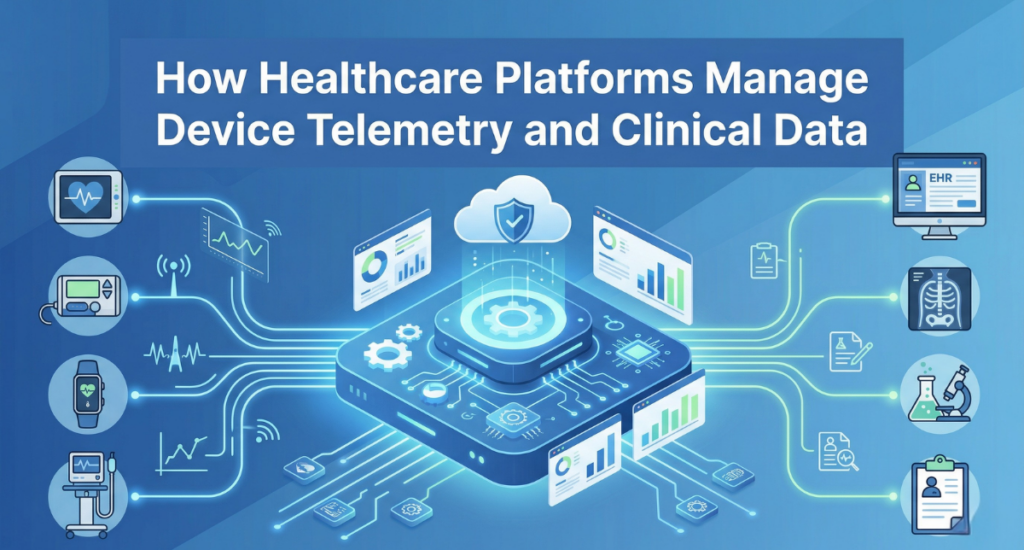
- Medical device integrations: Remote monitoring devices transmit patient telemetry data into clinical systems for real-time monitoring and alerts.
- Claims and billing systems: Clinical documentation and coding data are transmitted to revenue cycle management platforms for claims processing.
Each of these integrations requires reliable data mapping, messaging standards, and workflow orchestration.
The Technical Challenges of Healthcare Interoperability
Despite the availability of standards, interoperability remains one of the most complex areas of healthcare IT.
Common challenges include:
- Legacy healthcare systems: Many healthcare organizations still operate legacy EMR platforms that lack modern API capabilities, making integration difficult.
- Data mapping complexity: Different systems often represent the same clinical data using different formats or coding standards.
- Integration scale: Large healthcare organizations may operate hundreds of interfaces across clinical, administrative, and device platforms.
- Compliance and security requirements: Healthcare data exchange must comply with regulatory frameworks such as HIPAA and other patient privacy regulations.
Building reliable interoperability frameworks requires deep expertise in healthcare workflows, messaging standards, and scalable integration architectures.
Qatalys Perspective: Building Interoperability at Scale
At Qatalys, healthcare interoperability has been a core area of engineering focus for more than two decades.
Our teams have delivered over 3500+ custom interfaces connecting EMR systems, laboratories, medical devices, and pharmacy networks across healthcare environments.
Across multiple healthcare engagements, we have supported large-scale EMR platforms, ambulatory systems, and diagnostic integrations.
For example:
- For Aprima Medical Software, Qatalys led the development of a top-ranked EMR and Practice Management platform supporting physician practices with integrated clinical and financial workflows.
- For Alteer, we modernized a legacy HIS/EMR system into a scalable multi-tenant architecture while enabling integrations with third-party systems and medical devices.
- Our teams have also built interfaces and integration components across organizations such as Allscripts, CVS Caremark, Ramsoft, Preventice, and Intersystems, enabling real-time clinical and operational data exchange.
To support large-scale interoperability requirements, Qatalys developed the QIntegration Engine (QIE) – an integration platform designed specifically for healthcare messaging standards, including HL7, CDA, CCD, X12, and NCPDP.
QIE provides capabilities such as:
- message transformation and mapping
- workflow orchestration
- transaction monitoring and exception handling
- service bus architecture
- audit logging and compliance tracking
These capabilities enable healthcare organizations to integrate clinical, administrative, and diagnostic systems in a reliable and scalable way.
Conclusion: Healthcare Interoperability
Healthcare interoperability is not simply a technical feature – it is the foundation that allows modern healthcare ecosystems to function.
As healthcare organizations expand their digital infrastructure across clinical systems, diagnostic platforms, and patient-facing technologies, interoperability becomes critical for ensuring that data flows seamlessly across the care continuum.
Achieving true interoperability requires more than adopting standards. It requires robust integration architecture, deep healthcare domain expertise, and scalable engineering frameworks.
Organizations that invest in interoperable healthcare systems gain the ability to deliver more coordinated care, streamline operations, and build data-driven healthcare platforms that can evolve with the industry.
FAQs
1. What is interoperability in healthcare?
Healthcare interoperability refers to the ability of healthcare systems and applications to exchange patient and operational data while preserving its meaning and usability across platforms.
2. What are the main interoperability standards used in healthcare?
Common standards include HL7 for clinical messaging, FHIR for API-based healthcare data exchange, DICOM for imaging systems, and X12 for healthcare financial transactions.
3. Why is healthcare interoperability difficult?
Healthcare environments involve many different systems built by different vendors, often using incompatible data formats. Integrating these systems requires complex data mapping, messaging frameworks, and workflow orchestration.
4. What role do integration engines play in healthcare interoperability?
Integration engines act as the central layer that routes, transforms, and monitors messages between healthcare systems, enabling reliable data exchange across platforms.
5. How does interoperability improve patient care?
By allowing clinicians to access complete and up-to-date patient information across systems, interoperability supports faster diagnoses, better care coordination, and improved patient outcomes.

Qatalys is a global AI-powered digital transformation company helping businesses drive innovation, scale operations, and achieve sustainable growth. With 30+ years of experience and 1,000+ projects delivered, Qatalys offers services including digital transformation, GCC setup, product engineering, growth services, cybersecurity, and QA. Serving industries like healthcare, BFSI, retail, and more, Qatalys combines global expertise with cost-efficient delivery from India.